


SUBTOTAL:
$0.00












FAQ
What is the best mat to protect carpet from office chairs?
John BeaverThe right chair mat for carpet depends on a number that is easy to skip before you buy: how deep the carpet pile is. Low pile takes a thin vinyl mat with a studded or dimpled underside. Medium and high pile need a thicker, stiffer mat with longer studs. A smooth-backed mat belongs on hard floors; on carpet it has nothing to grip, so it slides.
Measure first, then pick. A ruler and five minutes tell you which type of mat you need, what size, and whether one of ours suits your floor. Sometimes it won't, and we'll say so.
Which chair mat suits your carpet pile?
| Carpet pile | Pile height | What to look for in a mat | Does a Desky mat suit it? |
|---|---|---|---|
| Low | Under about 6 mm (1/4 in) | Thin vinyl (PVC) mat, short studs or dimples | Yes, within Desky's "up to 6mm with underlay" rating: Dimpled Chair Mat or Clear Chair Mat |
| Medium | About 6 to 12 mm (1/4 to 1/2 in) | Thicker, stiffer mat, longer studs, rated for medium pile | No. Both are rated for low pile |
| High | About 12 to 19 mm (1/2 to 3/4 in) | Thicker, stiffer mat, longer studs, rated for high pile | No |
| Shag | Over 19 mm (3/4 in) | A mat rated for the carpet's full thickness, padding included | No |
These bands are a working scale flooring retailers use, not an industry standard, and guides differ by a millimetre or two at the edges. A mat's rating may not mean pile height at all; the next section covers that trap.
How to measure your carpet
You need two readings: pile height, and whether there is soft padding underneath.
- Pick a spot just outside your rolling area. Carpet compresses under weight, so a patch the chair has flattened reads low.
- Part the fibres with your fingers until you can see the backing, the base layer that holds the fibres.
- Stand a ruler on the backing and read the height at the fibre tips. That is your pile height.
- Repeat in two or three more spots and note the typical reading.
- Press down hard with your palm. If the carpet sinks noticeably and springs back when you lift your hand, there is soft padding (also called underlay) beneath it.
Pile height vs total thickness
Pile height counts the fibres only. Total thickness adds the backing and the padding, and the padding can be thicker than the pile. One flooring guide puts typical padding at about 3 to 6 mm (1/8 to 1/4 in) under low-pile and commercial carpet, and 9.5 to 12.7 mm (3/8 to 1/2 in) under medium pile.
Some mat makers rate their mats by carpet thickness including padding, not by pile alone. One manufacturer's medium-pile mat is rated for carpet "up to 3/4 in thick (including padding depth)" (19 mm). A carpet with 6 mm (1/4 in) of pile on 9.5 mm (3/8 in) of padding is already about 16 mm (5/8 in) thick before you count the backing.
So if a rating includes padding, add a typical padding figure to your pile reading before you compare. If you can't tell which it means, compare against the deeper number.
Matching the mat to the pile
Rolling a chair over bare carpet flattens the fibres and, over months, wears ruts where the chair sits. A mat spreads the wheel load, but only if it suits the pile. Pile depth decides how stiff the mat should be and how long its studs should be.
Studs (also sold as cleats or dimples) are the small bumps on a carpet mat's underside. They face down and hold the mat in place. Desky's mats use dimples or bobbles, not pointed spikes.
Low pile, under about 6 mm (1/4 in). Short, dense carpet doesn't give much, so a thin vinyl mat with short studs or dimples sits flat and grips. Longer studs can stop a mat sitting properly on low pile. Both Desky mats are made for this floor.
Medium pile, about 6 to 12 mm (1/4 to 1/2 in). The carpet now compresses, so the mat must be stiff enough to bridge it rather than flex into it, with longer studs. Look for a thicker mat rated for medium pile, and check whether that rating includes padding.
High pile and shag, over about 12 mm (1/2 in). Same logic, more of it. A thin mat on soft carpet lets the wheels sink in, which just moves the rut problem up one layer. On shag, over 19 mm (3/4 in), buy only a mat rated for the carpet's full thickness, padding included.
At least one manufacturer advises going up one pile rating if your carpet falls between two ratings, if you sit on the mat 8 or more hours a day, or if you weigh 91 kg (200 lb) or more.
None of this comes from an independent lab test, but mat makers' ratings and the guides we found point the same way: deeper pile, thicker and stiffer mat, longer studs.
Which material: PVC, polycarbonate or tempered glass?
PVC (vinyl). Rigid PVC contains no plasticiser. Flexible grades have it added, and the more they contain, the more they bend, so flexible grades conform to the floor beneath them while rigid grades hold their shape. Both Desky mats are PVC; the Chair Mat is PVC and ABS.
Polycarbonate. A tough, clear plastic with high impact resistance. It is fairly stiff yet can be bent without heat. Its scratch resistance is modest, and UV light can yellow it unless the plastic is stabilised.
Tempered glass. About four times stronger than ordinary glass, and when it does break, it crumbles into small granular pieces instead of sharp shards. Edge damage is the usual trigger for a break. Glass mats are heavy, and tempered glass can't be cut to fit.
Rubber and rug-style mats. We found no solid material data on these.
Why the "best material" claims online conflict
Three interested sources give three incompatible answers. An editorial buying guide picks polycarbonate for carpet and warns that tempered glass can break as the carpet compresses under it. A PVC mat manufacturer says polycarbonate scratches easily and cracks more easily than its vinyl. A glass mat seller recommends glass for plush carpet and says plastic mats wear out far sooner. Each has a product to sell or a commission to earn, and we found no independent test that settles it. The lifespan figures you'll see quoted come from sellers too.
We sell PVC mats, so apply the same scepticism to us. What you can check yourself, on any material:
- It lies flat once unrolled and settled, with no corners lifting.
- It doesn't visibly dip or flex into the pile when you roll across it.
- It stays put: the studs or dimples grip, and the whole mat doesn't creep.
- The edge suits your setup. A bevelled edge slopes down so the wheels roll on and off like a small ramp. A lip is a tongue that covers the carpet under the desk, where the front wheels go when you pull in close.
What size chair mat do you need?
Size the mat to your rolling zone, the floor your chair covers while you work, not to the width of your desk.
- Measure the base of your office chair across its widest point, wheel to wheel.
- Sit at your desk, then roll back and side to side as far as you usually do.
- Zone width is the base width plus your sideways travel. Zone depth runs from the front edge of the desk to the centre of the chair base at its furthest roll-back, plus half the base width.
- Compare with mat sizes and round up, not down.
The Desky Chair Mat comes in 1200 x 915 mm (47.2 x 36 in) and 1350 x 1150 mm (53.1 x 45.3 in), and the Clear Chair Mat in 1200 x 900 mm (47.2 x 35.4 in). A zone of 1118 x 864 mm (44 x 34 in) fits the smaller Chair Mat or the Clear Chair Mat. At 1270 x 1067 mm (50 x 42 in), you need the 1350 x 1150 mm (53.1 x 45.3 in) size. A desk wider than the mat is fine: the mat only has to cover where the chair goes.
Which Desky mat, and which pattern?
Both Desky mats are 2 mm (0.08 in) PVC, and Desky rates both for carpet "up to 6mm with underlay". In practice that means short, dense, low pile. If your pile is longer than about 6 mm (1/4 in), or the carpet feels soft and springy underfoot, neither is the right mat for you; choose a thicker, stiffer mat rated for medium or high pile. A 2 mm mat is also thin: one owner found it softer than expected, with the wheels sinking in more than on stiffer mats. Both mats carry a 5-year warranty.
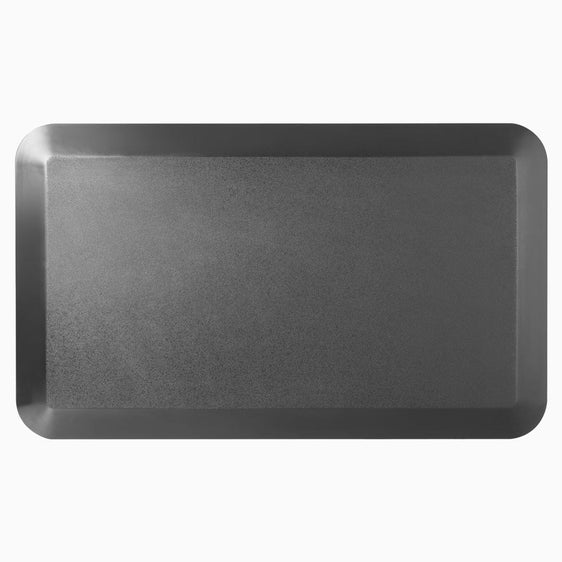
The Desky Chair Mat comes in two patterns. For carpet, order the Dimpled pattern; the Smooth pattern is for hard floors. Check before checkout: owner reviews include people who ended up with the Smooth pattern on carpet, and one found it slid. The mat is water resistant and protects the floor from scratches and dents. Its key shape puts a tongue under the desk, and bevelled top edges let the wheels roll on and off.
{{ spec_chair_mat }}
The Clear Chair Mat is a translucent PVC rectangle, 2 mm (0.08 in) thick, with a bobbled underside to grip the carpet and the same low-pile rating. Pick it if you'd rather have a plain rectangle with no tongue under the desk.
{{ spec_clear_chair_mat }}
Alternatives to a chair mat
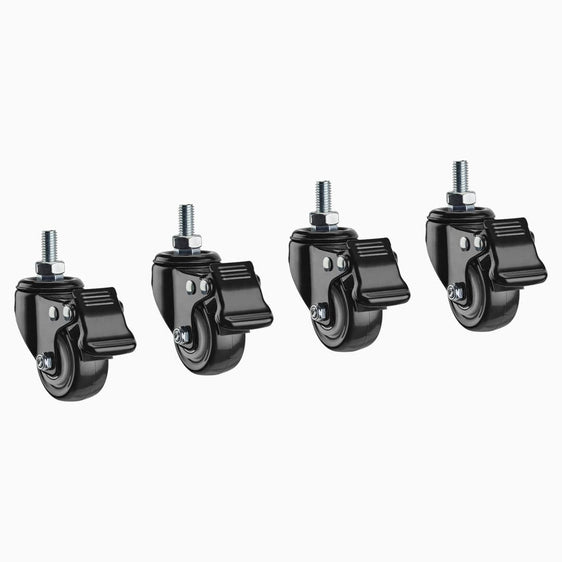
Swap the castors. Desky's Office Chair Caster Wheels are 76 mm (3 in) polyurethane wheels, and Desky says they roll across carpet without damaging it. That is our claim, not an independent test, and guides disagree on which castors suit carpet. They fit Desky chairs except the Luminous and the Adjustable High Back Mesh Chair. On low pile they are an option to weigh alongside a mat or instead of one.
Put down a flat, low-pile rug. A tightly woven flat rug can give the chair a firmer surface than plush carpet, while a thick or shaggy rug crushes under the wheels just as carpet does. The photo shows the idea on a hardwood floor; on carpet, keep the rug flat and low.

FAQ
Should you use a chair mat on carpet?
Yes, if you roll a chair over it. Rolling flattens the pile and wears ruts where the chair sits, and a mat spreads the wheel load. Pick one rated for your carpet's pile depth.
How thick should a chair mat be for carpet?
There is no single number. Mat makers rate mats by the carpet depth they suit, and deeper pile needs a thicker, stiffer mat. Desky's 2 mm (0.08 in) mats are rated for carpet "up to 6mm with underlay", which in practice means low pile only.
Can you use a flat chair mat on carpet?
Not a smooth-backed one. Smooth undersides are made for hard floors and slide on carpet. On carpet, use a mat with studs, cleats or dimples facing down.
What can I use instead of a chair mat?
Carpet-friendly castors or a flat, low-pile rug. Desky's polyurethane castors are sold for rolling on carpet, and a flat-woven rug can give a firmer roll than plush pile. A thick, plush rug crushes like carpet.
About the author

You may also like

Where should I position my monitor arm?
Proper positioning of your monitor arm is essential to avoid unnecessary strain and boost productivity...
Mar 28, 2024

How much space do you need for a dual monitor setup?
Two 24 inch monitors need a desk at least 120 cm (47.2 in) wide, and they're comfortable on 150 cm (59...
Mar 28, 2024

What is a grommet mount?
In the world of ergonomic office furniture, the method of installing accessories can significantly imp...
Mar 28, 2024

Is 3 monitors too much for work?
Three monitors aren't too much for work if a third window has to stay in view while you use the other ...
Mar 26, 2024
